Stillframe
Stillframe is a video studio for YouTube channels that runs on one machine. You give it a topic, and it takes the video through the usual stages: ideas, an outline with every claim fact-checked, a script, a voice, a shot list, the pictures, and a final render with music, subtitles and chapters. Every stage waits for me to read it, edit it and approve it, and every AI call is cached, budgeted and logged with its cost.
It started as an explainer tool with motion graphics and ended up making narrated history films. The last few I’ve made: Stalin’s life in ten minutes, the Hindenburg in three, the Black Death in London, and an eleven-minute D-Day film that’s rendering as I write this.
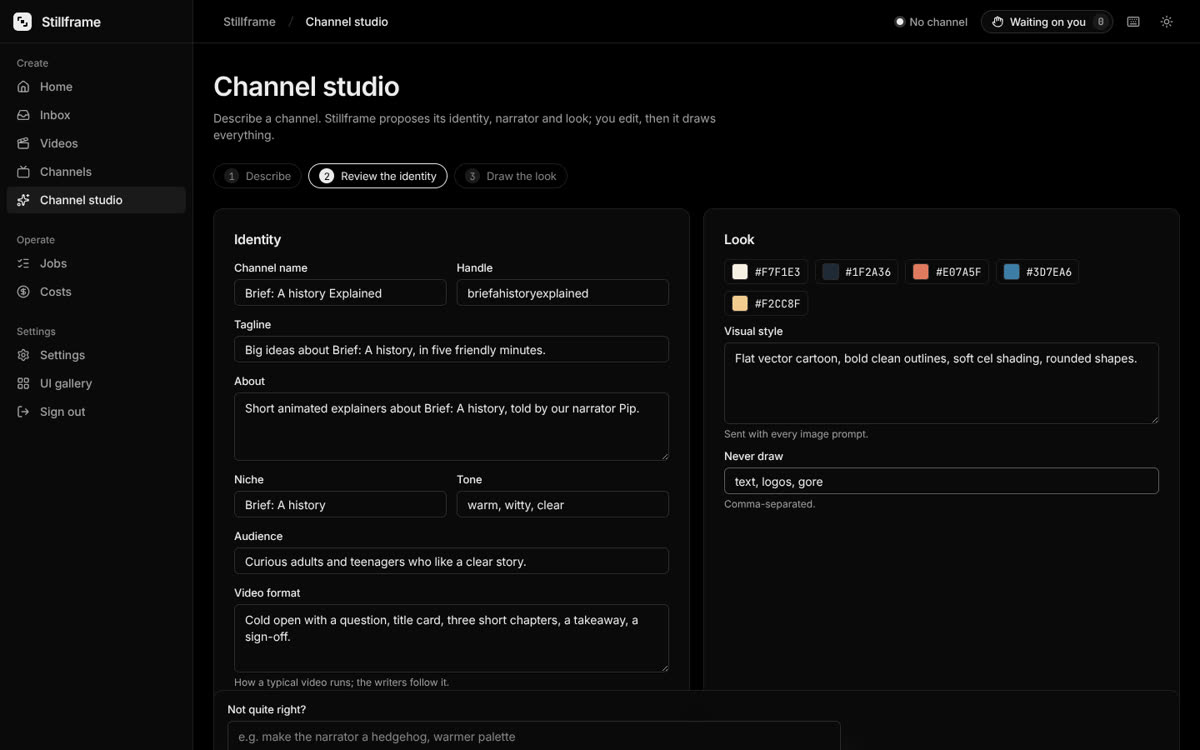
Two ways of moving a still picture
Every shot starts as one AI painting. The trick is making it move without paying for AI video, which is expensive and drifts from shot to shot.
The first way was parallax: the painting is cut into layers (sky, background, people, foreground) and the layers slide past each other as the camera drifts. It looks good when it works, but cutting a painting into clean layers is fiddly, and seams and halos give it away.
The newer way is Gaussian splatting. Each painting is turned into a real 3D scene by a model called SHARP, and then the app films it with a gentle camera move. Near things slide past far things and hide what’s behind them, with no layers to come apart, and it costs about a tenth of the parallax art.
The look is set per channel. As well as the 3D animated-film look above, there are claymation, papercraft and hand-painted miniature presets, each tested through the 3D step before it went in.
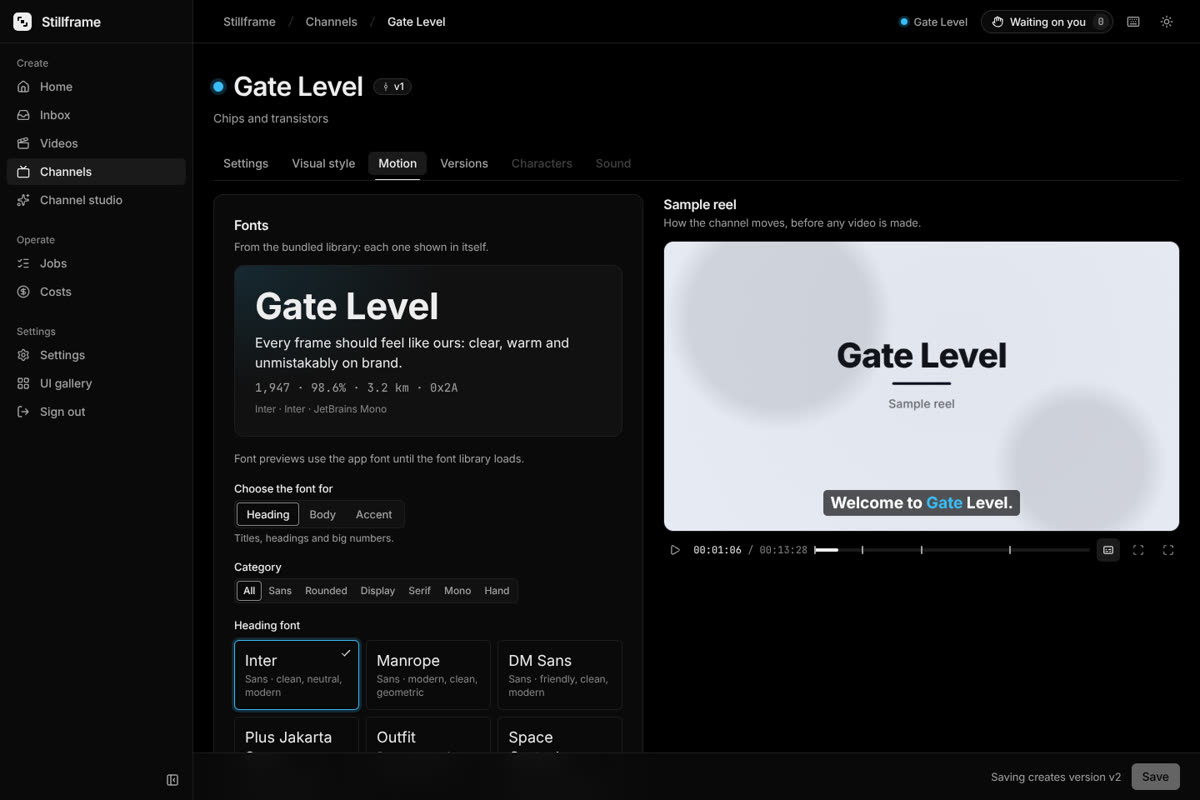
Where it is
An eleven-minute video costs about £10 in AI calls: roughly £4 of pictures, £2 of writing and planning, £1 of picture checks, and under 30p of narration. There’s a small command-line tool and a step-by-step guide, so making one is a few commands and a few reads.
What needs fixing
- The 3D model’s licence. SHARP’s weights are for non-commercial research only. That’s fine for testing, but it has to be swapped for something commercially clean before any of these videos earn money.
- Speed. On a four-core cloud box with no GPU, filming the 128 shots of the D-Day video takes about thirteen hours. Most of that is overhead that a GPU, and keeping models loaded between shots, would remove.
- Pictures that leak. The first picture sets the style for all the others, and sometimes its main character turns up where nobody should be. Eisenhower appeared on a German clifftop and on a beach in the present day. I fix those by hand for now.
- The image model’s safety filter. It refused Rommel, German uniforms and a piper with a knife in his sock. The app now rewords a refused picture once by itself, but some still need a plainer description.
- The automatic reviewer. It flags far more shots than are actually wrong, so I trust my own eyes over it.
Next is twenty videos on one channel, made on my laptop in the evenings, to see whether people actually watch them.